
Review - Dracula

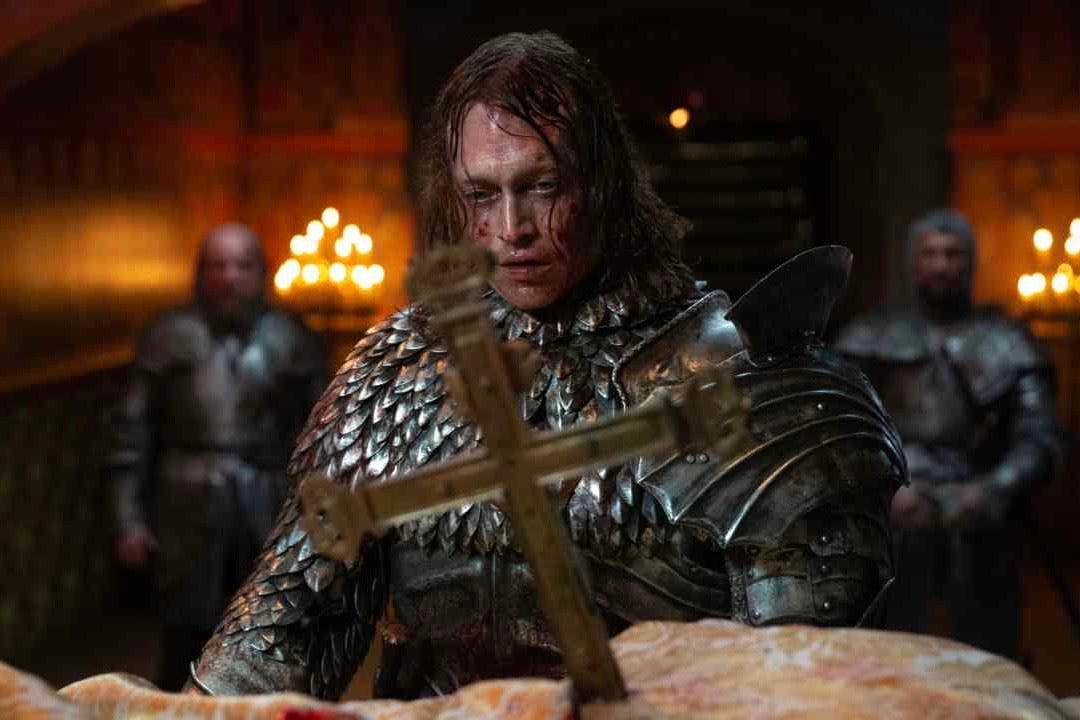
Starring Caleb Landry Jones, Christoph Waltz, Zoë Bleu, Matilda De Angelis. Written and directed by Luc Besson. 129 minutes. Rated R. In theaters.
I’ll cop to giggling in appreciation more than once at the threadbare exuberance of Luc Besson’s “Dracula.” It’s an often risible craptacular thrown together with no particular interest in Bram Stoker’s oft-told story, but a mad love of making images… especially silly ones. The disgraced auteur who pioneered France’s cinema du look movement with trendsetters like “Subway” and “La Femme Nikita” has been exiled to the budgetary hinterlands ever since bankrupting his EuropaCorp studio with the extravagantly gaudy, $180 million “Valerian and the City of a Thousand Planets,” a film for which I have an admittedly absurd affection. “Dracula” is Besson’s attempt to do cinema du look on a bargain basement budget. Let’s just say the seams show.
The movie was originally called “Dracula: A Love Tale,” and I’m not sure why the distributor dropped the subtitle since it would’ve helped differentiate this film from the dozens of other big screen adaptations, most recently Radu Jude’s 2025 “Dracula,” an outrageous, three-hour semi-pornographic prank/semiotics experiment/audience endurance contest in which Generative AI was revealed as the biggest bloodsucker of them all. The old title also would have tipped us off that this particular vampire is more of a lover than a biter, spending 400 years mourning his dead wife and finally finding her reincarnated in 1880s Paris.
Besson isn’t so much adapting the Stoker novel as he’s adapting Francis Ford Coppola’s 1992 adaptation, “Bram Stoker’s Dracula.” (I’m not the only person who has joked that this film should be called “Luc Besson’s Francis Ford Coppola’s Bram Stoker’s Dracula.”) Caleb Landry Jones stars as the titular Transylvanian, and framing one of horror’s greatest monsters as a tragic figure while casting one of the most enthusiastically off-putting actors in contemporary cinema is certainly what the kids today would call “a choice.” Jones is not the kind of performer who believes in half-measures, hurling himself into Besson’s discount fantasia with full-bodied brio.
What’s nice is that everyone involved assumes you’ve seen a “Dracula” movie before, or maybe “Nosferatu” a couple Christmases ago, so Besson speedruns through the story and collapses characters into composites. Lucy and Renfield have been merged into Matilda De Angelis’ Maria, part of an army of fanged supermodels the count has infected and dispatched across the globe to track down his immortal beloved. The film barely bothers with boring old Jonathan Harker, treating him as a narrative speedbump. Christoph Waltz shows up early as the Van Helsing character – here billed simply as “Priest” – spending a large portion of the movie seated and disinterestedly dispensing exposition as if he’s not sure why they’re telling this story again, either. Like most performers in the film, Waltz makes amusingly little effort to pretend he’s in a 19th century period piece. (Half of these actors seem like they’re about to start texting.)
I loved the zany Looney Tunes montage of the despondent Drac’s unsuccessful suicide attempts – how many times can one widower jump out the same window before becoming Wile E. Coyote? However, the director only appears aroused when he finds an excuse for insane set-pieces, like flirting with Ken Russell “Devils” imagery when Dracula goes wild at a nunnery, or an uncomfortable sidebar in which the count invents a perfume that works like Spanish Fly and sets about seducing gaggles of women at parties and outdoor bazaars across Europe and the Middle East. (A lot of the film’s exotic locales are so obviously indoor soundstages, it’s kind of comical.) For a filmmaker with Besson’s personal history to invent a subplot in which his protagonist spends centuries roofie-ing half the women on the planet is, well… that’s certainly another “choice.”
I’m old enough to remember when a truncated cut of Besson’s best film, “Leon” was released in the U.S. as “The Professional” back in 1994. The movie’s central relationship flirted with so many queasy taboos, most people left the theater wondering if this guy was some kind of sick pervert or if he was just French. (Turns out both.) “Dracula” isn’t as drooly as some of the director’s earlier efforts – I went to see Besson’s “The Big Blue” when I was 13 years old solely on the basis of how he’d photographed Rosanna Arquette’s bare back in the trailer – but it’s also difficult to compete in this department with all the heaving bosoms and heavy breathing of Coppola’s “Dracula,” one of the most dementedly horny movies of the Clinton era.
Big chunks of Besson’s film are obvious homages to the Coppola picture’s nutzoid, rococo imagery, with Jones’ longhaired, old man makeup such a lift of Gary Oldman’s look that the entire sequence borders on actionable. (My favorite tip of the hat is slightly more subtle, when the count is first introduced being interrupted while schtupping his wife upright against their bedroom door, Sonny Corelone-style.) In recent years, Besson has become overly fond of a bright, crisply digital videography that can’t help but call attention to the fly-by-night nature of these cheap costumes and sketchily dressed sets. One can be tickled by the sight of Dracula kicking back at home with a gaggle of computer-animated, stone gargoyle henchmen while still bemoaning the fact that nobody seems to have finished the CGI.
“Dracula” is now in theaters.